

How to Make Vegan Sour Cream

August 19, 2024
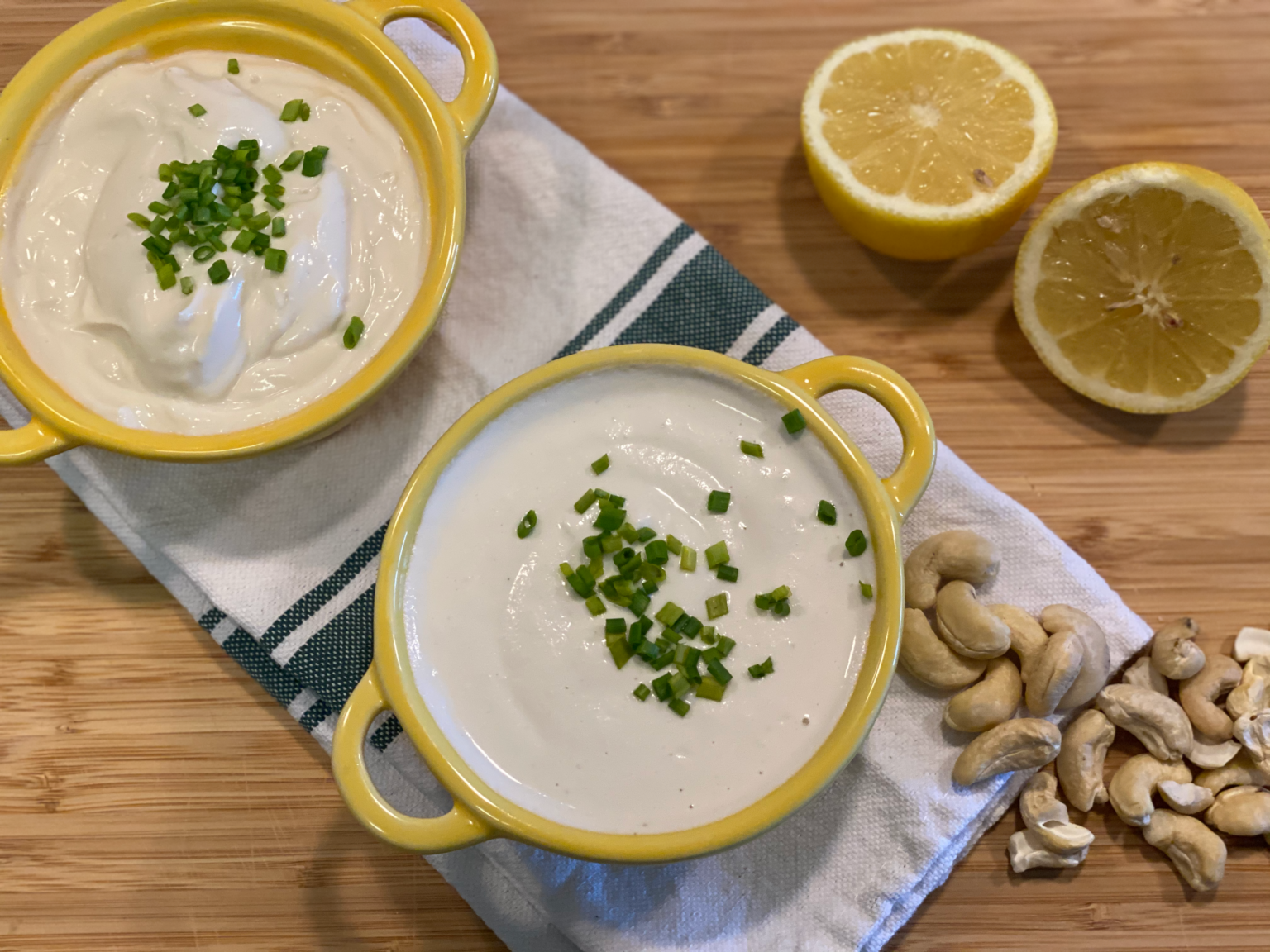
Vegan sour cream can be made using different base ingredients, each bringing its unique qualities to the table. Two popular bases for vegan sour cream are cashews and silken tofu.
Cashew-Based Vegan Sour Cream:
Cashew-based sour cream is rich, creamy, and has a slightly nutty undertone. Cashews, when soaked and blended, create a smooth, luscious texture that closely mimics traditional dairy sour cream. The natural fats in cashews contribute to its thick consistency and indulgent mouthfeel. Cashews also have a neutral flavor profile that easily takes on the tanginess of added lemon juice or apple cider vinegar, which is key to achieving that characteristic sour cream taste. Because of its rich texture, cashew-based sour cream is often favored for dips, dolloping on top of dishes like baked potatoes or tacos, and as a base for creamy dressings.
Silken Tofu-Based Vegan Sour Cream:
Silken tofu, on the other hand, offers a lighter alternative to cashew-based sour cream. It has a smooth, soft texture that, when blended, creates a creamy consistency without being overly rich. Silken tofu has a more neutral taste compared to cashews, making it an excellent canvas for absorbing tangy flavors. It’s a good option for those looking to reduce fat content while still achieving a creamy texture. Silken tofu-based sour cream tends to be slightly less thick than its cashew counterpart, but it’s still versatile in its uses. It’s particularly good for adding creaminess to dishes without overpowering the other flavors, such as in soups, sauces, or as a topping for vegan chili.
Comparing the Two:
Texture: Cashew-based sour cream is thicker and richer, while silken tofu offers a lighter, more delicate creaminess.
Flavor: Cashew sour cream has a slight nutty taste, whereas silken tofu sour cream is more neutral, making it more adaptable to different flavors.
Nutritional Profile: Cashew sour cream is higher in fat due to the natural oils in cashews, while silken tofu is lower in fat and higher in protein, making it a potentially healthier option depending on your dietary needs.
Versatility: Both can be used in similar ways, but cashew-based sour cream might be preferred for dishes where a richer, more indulgent texture is desired, while silken tofu-based sour cream is ideal for lighter dishes or when a lower-fat option is preferred.
Both options have their merits, and the choice between them often comes down to personal preference, dietary goals, and the specific dish you’re preparing.
Cashew Vegan Sour Cream
Ingredients:
1 1/2 cups raw cashews
3/4 cup water (room temperature)
2 tablespoons apple cider vinegar
1 tablespoon freshly squeezed lemon juice
1/4 teaspoon salt
1 container (5.3 oz / 150 grams) plant-based plain yogurt (optional but recommended)
Instructions:
Soak the raw cashews in boiling water. If using a high-powered blender, soak for 2 hours. If not, soak for 4 hours.
Drain the cashews and place them in your blender.
Add the water, apple cider vinegar, lemon juice, salt, and the optional plant-based yogurt to the blender.
Blend until smooth and creamy.
Transfer the sour cream to a container and refrigerate. The sour cream will thicken as it sets in the refrigerator.
Nutritional Breakdown (Per 2-tablespoon serving, assuming 16 servings)
Calories: 60
Total Fat: 4.5g
Saturated Fat: 0.8g
Cholesterol: 0mg
Sodium: 45mg
Total Carbohydrates: 4g
Dietary Fiber: 0.5g
Sugars: 0.5g
Protein: 1.8g
Note: Nutritional values are approximate and can vary depending on the exact ingredients and brands used.
Print the Recipe Here
Silken Tofu Sour Cream
Ingredients:
1 (7 oz) packet silken tofu (not firm)
2 tablespoons lemon juice
2 tablespoons avocado oil (or any light-flavored oil of your choice)
1/2 teaspoon salt
1 teaspoon sugar or maple syrup (optional)
Instructions:
Place all the ingredients into a blender.
Blend until smooth and creamy.
Taste and adjust seasoning if needed.
Note: The addition of sugar or maple syrup is optional, but it can enhance the flavor.
Nutritional Breakdown (Per 2-tablespoon serving, assuming 8 servings)
Calories: 40
Total Fat: 3.5g
Saturated Fat: 0.5g
Cholesterol: 0mg
Sodium: 100mg
Total Carbohydrates: 1g
Dietary Fiber: 0g
Sugars: 0.3g
Protein: 1g
Note: Nutritional values are approximate and can vary depending on the exact ingredients and brands used.