

How to Make a Juicy Roasted Turkey

September 20, 2024
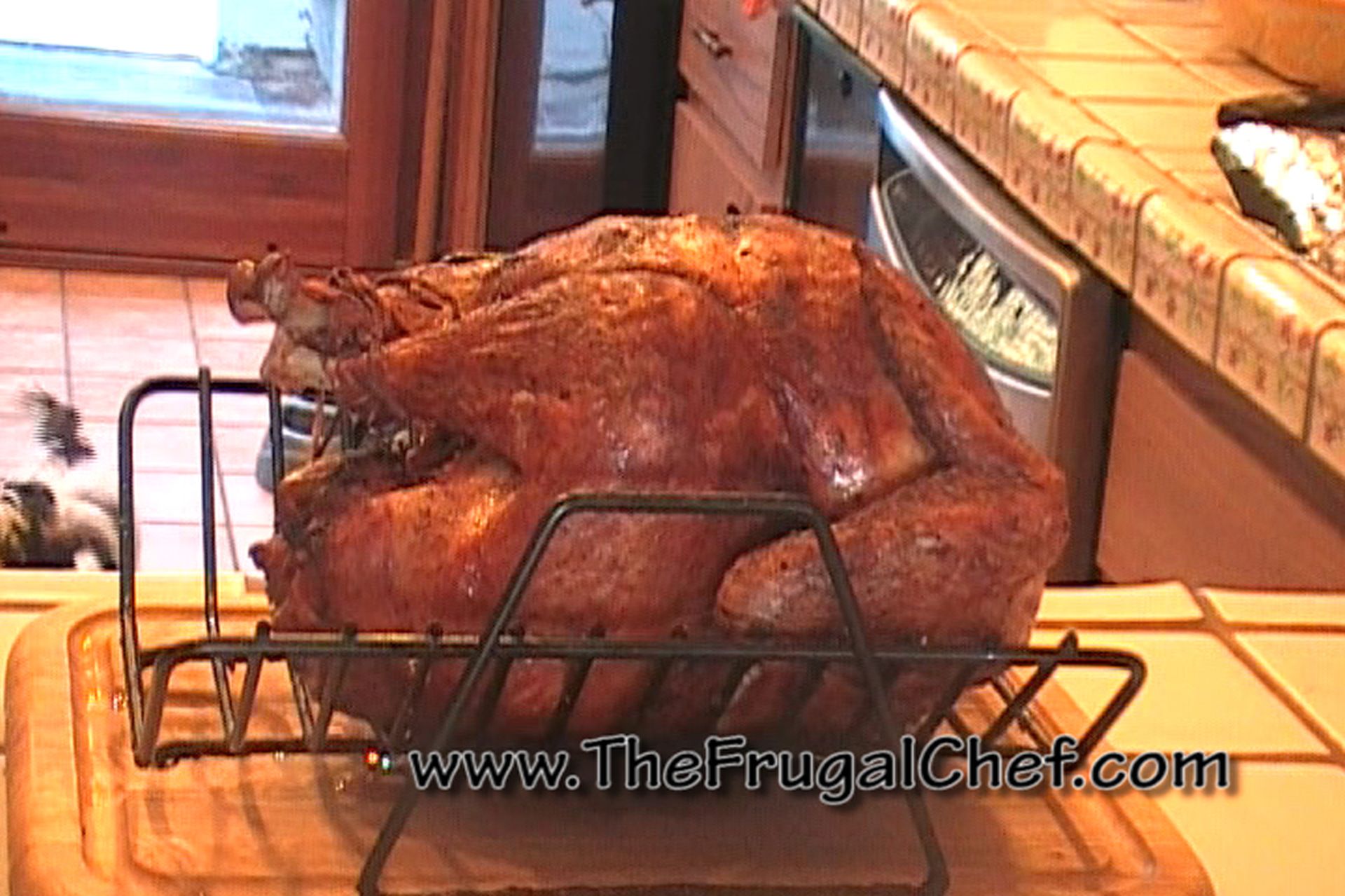
After reading this post and watching the video (if you choose to), you’ll be equipped to roast a turkey that’s perfectly juicy and packed with flavor. While roasting a turkey may seem intimidating, especially if it’s your first time, it doesn’t have to be. By following a few simple guidelines, you’ll be able to achieve a beautifully roasted, flavorful turkey every time.
For this particular turkey, I used a wet brine. Wet brining involves soaking the turkey in a saltwater solution—about 35% salt. Water is commonly used for the brine, but you can also opt for beer or wine for added flavor. Most wet brines also include sugar and spices like bay leaves and peppercorns to enhance the taste.
Soaking the turkey in this brine allows the salt to relax the proteins in the meat, helping it absorb the liquid. This results in a more moist bird, particularly in the breast, which can often dry out during roasting.
If you’re using a Kosher turkey, there’s no need to brine it, as these birds are already treated with a solution to maintain moisture.
A quick note: this recipe is tailored specifically for a wet-brined turkey. If you’ve dry brined your turkey, the method and timing will differ slightly. For those using a dry-brine, I have another post with specific instructions for that method.
By following these tips, you’ll be well on your way to roasting a turkey that’s tender, juicy, and delicious!
Benefits of Brining:
- Moisture Retention: The salt in the brine helps the turkey retain moisture, especially in the breast meat, which can dry out during roasting.
- Enhanced Flavor: The herbs and aromatics add layers of flavor, while the salt deeply seasons the meat.
- Even Cooking: Brining ensures that the turkey stays juicy and flavorful, even if it’s cooked a bit longer than expected.
Flavor Profile:
This turkey has an incredibly moist and tender texture thanks to the wet brine, which infuses the meat with a delicate balance of saltiness and aromatics. The brine’s bay leaves, peppercorns, thyme, and rosemary impart subtle herbaceous notes, while the optional beer or wine adds depth. The roasted skin, crisped with olive oil or butter, delivers a savory, rich flavor with citrus undertones from the lemon and garlic stuffed inside. The breast meat, typically prone to drying out, remains juicy and flavorful.
Wet Brined Roast Turkey Recipe
Ingredients:
1 whole turkey (12-14 lbs), thawed if frozen
1 gallon water (or substitute part with beer or wine)
1 1/2 cups kosher salt
1/2 cup sugar (optional)
2-3 bay leaves
1 tablespoon black peppercorns
1 tablespoon dried thyme
1 tablespoon dried rosemary
1 lemon, quartered
1 onion, quartered
4 garlic cloves, smashed
2-3 tablespoons olive oil or melted butter (for roasting)
Fresh herbs like rosemary, thyme, and parsley for stuffing the cavity (optional)
2 cups chicken broth (optional, for basting)
Instructions:
1. Prepare the Wet Brine:
In a large pot, combine water, salt, sugar, bay leaves, peppercorns, thyme, and rosemary. Stir until salt and sugar are fully dissolved. Bring to a simmer, then remove from heat. Let cool completely before using.
2. Brine the Turkey:
Place the turkey in a large brining bag or container. Pour the cooled brine over the turkey, making sure it’s fully submerged. Refrigerate for 12 to 24 hours.
3. Preheat the Oven:
Preheat your oven to 325°F (163°C).
4. Prepare the Turkey for Roasting:
- Remove the turkey from the brine and rinse it under cold water to remove excess salt. Pat dry with paper towels, both inside and out.
- Stuff the cavity with the lemon quarters, onion, garlic, and fresh herbs, if using.
- Rub the outside of the turkey with olive oil or melted butter.
5. Roast the Turkey:
- Place the turkey breast-side up on a roasting rack in a large roasting pan. Roast the turkey uncovered for about 13-15 minutes per pound, or until the internal temperature of the thickest part of the thigh reaches 165°F (74°C).
- Baste occasionally with chicken broth or pan juices, if desired.
6. Rest and Serve:
- Once cooked, remove the turkey from the oven and cover loosely with foil. Let it rest for 20-30 minutes before carving.
Nutritional Breakdown (per serving – based on 6 oz. of cooked turkey breast meat):
Calories: 275 kcal
Protein: 36g
Fat: 12g
Saturated Fat: 4g
Carbohydrates: 0g
Fiber: 0g
Sugar: 0g
Sodium: 780mg
Cholesterol: 110mg
(Note: Nutritional information is approximate and may vary depending on specific ingredients and portion sizes.)
Print the Recipe Here

Mary Ann
My name is Mary Ann Allen and I am here to help you get organized so you can save money on groceries and feed your family healthy, nutritious food. My multi-cultural cooking background comes from being born in the US and raised in Bolivia. I have 5 kids and own around 400 cook books. I absolutely love to cook!
10 Comments
-
theFrugalChef
Thank you Rene! Thanks for coming by!
-
lilian
I love the way you coock! thank you, I always check your webside.
-
theFrugalChef
Thank you Lillian! I really appreciate you coming by. Happy Thanksgiving!
Mary Ann -
Lovely
Hi Mary Ann!! First of all I want to tell you that you are my savior. We are newly weds and thanks to you my husband thinks I’m a great cook 🙂
But today I need your help more than anything!! We are going to gather with friends and I’m doing the turkey the stuffing and gravy. But I saw that in your video the turkey is 15 pounds mine is over 25!!! What do I do?? Do I use more ingredients?? Do I have to cook it longer than 4 hours?? Now I am so lost starting from brining do I use more quantity of ingredients? Or should I use all the same as your video?? Helpp!! I don’t want to ruin this thanksgivings 🙁
-
theFrugalChef
No worries sweetie pie! Everything will be perfect! Let’s see – first of all when you brine a turkey you want it to be completely submerged so you will have to add some more salt, brown sugar and spices to the extra water. I you are going to stuff the turkey you will definitely need to make more. However, if you do not stuff it, the quantity you make will depend on how many people you have.
Now, about the cooking. You will definitely have to cook this for longer. You have to calculate that a bird that big will probably cook for about six hours. You will have to check it after 5 1/2 hours by inserting a meat thermometer in the deepest part of the turkey thigh 180 degrees. If you stuff it the center of the stuffing should register 165 degrees. Just make sure you tent it loosely with foil once the skin starts browning so it does not over brown or burn.
Your turkey will be perfect! Don’t worry about it. Just start it with time, relax and be happy! Remember that your turkey needs to sit for a good 30 minutes before you carve it because that way the juices have time to settle. Good luck!
-
Carlo Garcia
Deicioso, lo preparare para navidad. Saludos!
-
barbara
hi Mary Ann i tried your brine and recipe and it turned out great. this was my first thanksgiving and it was hit thanks to you. Thank You!!! Happy Thanksgiving!!! hope you had a good one.
-
Antoinette
Hello,
I have a 13 lb frozen butterball turkey that I am thawing using cold water. I would like to know if im interested in cooking with my convection oven setting, what would that be? Would it still be the setting that you recommend with 400 degrees for an hour breast side down and 375 there after with basting every hour? Also is this turkey okay to brine? Because it doesnt say its kosher on the package. And one more question sorry…is trussing necessary? I have twine, but was just wondering…
Thank You and have a happy thanksgiving!
-
theFrugalChef
Hi Antoinette!
I am afraid I really do not know that answer. I have never owned a convection oven. You are going to have to do some research and see what the time difference is between a normal one and yours. I know that convection ovens cook food a little faster and that they are awesome and that I wish I had one but that is it. Sorry!If the turkey has not been prepared with a solution you can brine it. It should say ‘turkey’ only on the package and you are fine to go. Trussing is really up to you. Some people think that it is not a good thing because it prevents the thigh from cooking in a uniform way. I personally always tie up my turkey.
I never stuff it when I cook it but if you do I think trussing is a good idea! Thank you very much for stopping by! Happy Thanksgiving to you too!
Mary Ann


Comments are closed.
Rene Fernandez
Lovely done! Kudos, MaryAnn!